|
- BAEKELAND, Leo Hendrik, Chemist. *11/14/1863 in Gent (Belgium),
+ 2/23/1944 in Beacon (New York, USA); Inventor of
Bakelite
( dictionary). dictionary).
1863-1880 BAEKELAND was born into the miserable living standard of a shoemaker family (parents: Charles and Rosalie B.), attended a state basic school and the "Athenaeum" in his home town before he proceeded to the Technical School in Gent. Here he entered his name for evening courses in chemics, physics, mechanics and economics. Yet early in his life he demonstrated his talents - in all the four fields he took first class honours.
1880 As a promising student he got a scholarship at the University of Gent for the time being the youngest student. Studies of natural sciences, specially of chemics with Theodore SWARTS, the successor on the chair of
August Friedrich KEKULÉ ( woodrow.org), who in 1865 had published the theory of the benzole ring. He showed keen interest in Celine SWARTS, his lecturer´s doughter and, encouraged by a producer of photographic plates domiciled in Gent, van MONKHOVEN, in photography. During his experiments he sacrificed the silver chain of the pocket watch he had inherited from his father to get silver nitrate and found a process to remove the admixed copper.
During his time at university he earned additional money as assistent reader - as he said later, inspired by the biography of Benjamin Franklin, in order to be not dependent on his parents. woodrow.org), who in 1865 had published the theory of the benzole ring. He showed keen interest in Celine SWARTS, his lecturer´s doughter and, encouraged by a producer of photographic plates domiciled in Gent, van MONKHOVEN, in photography. During his experiments he sacrificed the silver chain of the pocket watch he had inherited from his father to get silver nitrate and found a process to remove the admixed copper.
During his time at university he earned additional money as assistent reader - as he said later, inspired by the biography of Benjamin Franklin, in order to be not dependent on his parents.
1882 Bakkalaureat, Bachelor of Science.
1884 PHD maxima cum laude.
1887 Professor of chemistry und physics at the Higher School of Sciences of Brugge. In a chemics contest with the graduates of all four Belgic universities he was awarded the first price: A travel scholarship that he did not draw upon before 1889.
1888 The university of Gent offered him the post of an assistant-professor which he accepted with pleasure in order to get back to his darling.
8/8/1889 Marriage with his "greatest discovery" (Baekeland) Celine SWARTS.
1889 BAEKELAND was promoted to a Senior Lecturer and by help of his scholarship attended the University College in London, Oxford University, and the university of Edingurgh, before he and his wife traveled to the USA to continue his studies on photography. In New York he came aquainted with Richard ANTONY, chief of a company that produced photographical items, who introduced him to C.F. CHANDLER, professor of chemics at Columbia University. The photo enthusiast and consultant of the company conviced BAEKELAND to stay in the USA and to use his talents in solving chemical problems of the industries. Baekeland abandoned his splendid academic career in Gent but kept the honorary title of a Senior Lecturer.
1891 The Antony Co. offered him a profitable position which he kept only two years in order to become an independent chemical consultant in the year...
...1893 Being chemical consultant he frittered away, as he said later, with to many tasks which engaged his mind. He ran out of money and was threatened by high indebtedness. In this situation confined to the sick-bed and equiped with leisure to ponder, he made up his mind to focus on one task when he would have recovered instead of having several "strings to his bow".
The result of his considerations was the establishment of the Nepera Chemical Company (together with Leonard JACOBI), where fotographical chemicals and papers were produced in a small extent. BAEKELAND completed the development of a fotographic paper, that he had yet begun as a student. His paper called "Velox" provided - as the name says - a quicker developping process as other products did and was head and sholders above the rest concerning the grey scale nuances especially those of the shadows. BAEKELAND achieved this by applying the silverchloride-emulsion in a special colloidal form and by avoiding to wash the paper, which was usual up to that time. It could eventually be developed quickly and reliably in artificial light, in contrast to the slow and faulty conventional process, which required the sun light.
Despite of all advantages - for the present "Velox" was a failure. For the narrow-minded professional photographers didn´t accept it, because the developing process was differing to much from the method they were used to. Together with the economocal crisis of 1893 this gave the company a great deal of trouble until the amateurs focused their attention on the new product and helped it to a roaring succes.
1899 BAEKELAND sold his "Velox"-Patent to EASTMAN KODAK
( kodak.com/history) for the considerable summ of 750.000 $ ten times as much as BAEKELAND wanted to demand, but fortunately EASTMAN had begun to talk.
1899 With this money B. purchased a villa (Snug Rock) for himself and his family and equiped the garage with a laboratory, where he could attend to his chemical interests without any obligations and financial sorrows.
1900 His first field of interest was electrochemistry. To brush up his knowlege in this branch of science he spent one winter at the Technical University of Charlottenburg (today TU Berlin). Back home in the US he participated in the development of the electrolytical "TOWNSEND-cell". The cell with which caustic soda and chlorine could be produced from salt should be optimized for the industrial use.
In 1903 this business led to the establishment of the Hooker Electrochemical Corporation which erected one of the biggest electrochemical plants of the world in Niagara Falls. Later B. stayed connected to the company as a consultant.
Since 1902 B. attempted - basing on the works of several predecessors ( history) - to create from phenole and formaldehyde a substitute for the expensive nature-product shellac which in those days was needed in high amounts by the electrical industries. His perseverance, the strict methodological work and not least his economical talents led him to success, while others had given up prematurely. He didn´nt only describe a complicated chemical formula, but also delivered a practical process for the making of the first completely synthetic plastic and so provided for an economical success of his Bakelite.
1907 he applied for his Heat-and-Pressure-Patent, which founded the plastic boom.
1906 B. was not only a pioneer in the field of chemics. Yet in the 90ies he had owned an automobile and in 1906 he undertook a round trip through Europe with his family - Celine and the children Nina and George Washington - in this progressive vehicle as one of the first car tourists at all. He published the family experiences in 1907 as a series in the motor-magazine "Horseless Age", later as a book "A Family Tour Through Europe". Another hobby was his yacht "Ion", built in 1915 after his own plans, in which he oscillated between the Hudson and Florida, where he purchased a country estate in Coconut Grove.
1910 B. established the General Bakelite Company (with partners in the important industry nations, since 1922 Bakelite Corporation) to produce and market the raw materials which were to be processed to many different plastic products.
1939 Until he sold the Bakelite Corporation to Union Carbide in 1939 he was the company´s president and coordinated the international activities. By the approaching war he felt compelled to participate in several high ranking peace conferrences.
1944 In the age of 80 years the "father of plastic" (TIME) - heaped with honours - died in Beacon, New York. Since his retirement he had spent most of the time in Florida cultivating exotic fruits, pressing wine, brewing his own beer and traveling on the rivers with his yacht. Shortly before his death he is sad to have had guilty concience because of the many military uses of his Bakelite.
Memberships
Since 1904 B. was president respectively member of different comunities of interests and government organisations:
President of the Chemist´s Club New York (Co-founder 1904)
President of the Electrochemical Society (1909)
President of the American Institute of Chemical Engineers (1912)
President of the American Chemical Society (1924)
Member of the U.S. Nitrate Supply Commission
Chairman of the Commitee of Patents
Trustee of the Institute of International Education
Member of the Advisory Board, Chemistry Division, U.S. Department of Commerce

- BAKELITE® (Bakelit®, Phenol-Formaldehyde-Polymere, Oxybenzyle(methylene-glycole)anhydride) Thermoset polymere, first completely synthetic plastic, patented in 1907 by Leo Hendrik BAEKELAND ( Dictionary) as a shellac substitute. Owing to its superior properties (insoluble, infusible, cost-effective) it soon occupied the celluloid dominated plastic market ("The Material of a Thousend Uses")(History
).
Principaly two manufacturing processes are possible:
1.) Process with a basic catalyst in three steps :
At first Bakelite A, a resin of low molecular weight named
"Resole", was obtained by mixing aequimolar amounts of phenol and formaldehyde with a small quantity of a base (NaOH) heated in a watery solution. The prepolymere (phenolrings with CH2OH-groups) was still soluble and fusible. BAEKELAND mixed powdered Bakelite A with fillers like saw powder or textile fibres as reinforcements and formed it in a hydraulic press with temperatures of 160-200° C (320-392° F).
Under this influence of heat Bakelite B came into being, a harder intermediate product that was almost insoluble and infusible but still could be softened by heat.
The applience of heat and high pressure (140-180° C (284-356° F), 4-6 bar) in a vet called "Bakelizer" brought the final thermoset stage Bakelite C under the loss of water and formaldehyde. Upon removal from the mould, the item was completely finished, needing only a quick treatment to remove the paper-thin burrs, remnants of resin that had oozed into microscopic seams between parts of the steel mould.
Alternativly Bakelite B could be formed instead of Bakelite A. It had to stay in the mould just for two minutes before it could be hardened in the Bakelizer. So a shorter and more economical process was accomplished.
2.) Process with a sour catalyst in two steps:
By a surplus of phenol with a sour catalyst Phenol and formaldehyde were polymerized to a thermoplastic resin called "Novolac" that was hardly marketable for the time being. In the middle of the 20ies J.W. AYLSWORTH discovered that Novolac could be hardened by addition of hexamethylenetetramine (Hexa), a transformation product from ammonia and formaldehyde. Hexa was added shortly before moulding the pressmasses; the protracted hardening in the Bakelizer became obsolete. This process accelerated and cheapened the production extraordinary and led to an impetuous development of the pressing industries.
The Bakelite products had to be of dark color because the resins were brown. Just small variations were possible depending on the filler material that might change the basic color into mottled yellow-brown, green-brown, red-brown or black.
Types of the German technical union of the resin producing and resin processing companies (T.V. der Hersteller typisierter Pressmassen und Pressstoffe)
Resole resins: Typ 0 filled with sawpowder, Typ 1 filled with asbestos, Typ M filled with asbestos cord, Typen T1 u. T2 filled with textiles
Novolac resins: Typ S "qick pressmasses" (Schnellpressmassen)
- CATALIN As a phenol-formaldehyde-polymere it is a direct descendant of Bakelite. After BAEKELAND´s patents had expired several chemists developed a clear dyeable resin in 1928 by neutralizing the base with lactic acid and not removing the water. But the material did not meet the heat and pressure requirements of the moulding process just as little as did the dyes which had been extricated by the German I.G. Farben from tar coal (German patent, American rights purchased by the Catalin Corporation). The solution was a new method of "setting" the resin - called "casting" avoiding high temperature and pressure but being rather complicated and protracted.
At first a lead mould had to be manufactured by coating a steel-replica of the product with liquid lead and then stripping off the cooled and cured coat. Only this lead mould received the sirup-like resin which then had to cure in a huge oven with 80°C (176° F) up to six days depending on the kind of dye. Then - after cooling - the Catalin peaces were tapped out of the casting mould with airhammers (the moulds being damaged). The peaces, though, were far from completed at this point. They needed a large-scale treatment of grinding, smoothing and polishing before they got their final shape and luster. The compensation for this laborious process was a multitude of opaque and translucent colors and a noble appearence of the material. Of course, according to this, it was expensive - and still is. The first products were small items like jewellery, cutlery grips and napkin rings. In 1937 the radio industry became aware of the material and brought us wonderfully designed cabinets. Unfortunately the beautyfull plastic turned out to be not very resistant against the ravages of time. Shrinking causes clefts, UV-light yellowing and because of the lack of reinforcements it easily breakes.
- CELLOPHANE (Hydrate-Cellulose), produced with the viscose (copper) process. Invented by the Frenchman Edwin REICHENBERGER in 1905. First used as packing material and not-steaming-up windows of gasmasks. In 1920 Du Pont purchased the US-american patent rights. Because the material was permeable to air it soon turned out to be unsuitable for the packing of food. In 1926 a process was found to to make cellophane airsealed by coating it with nitrocellulose. After the introduction in the tobacco industries in 1931 cellophane experienced an unprecedented boom as vaccuum package.
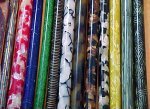
- CELLULOID semisynthetic thermoplastic polymere made of nitrocellulose with help of camphor. Patented in 1871 by the HYATT brothers (USA). History:
- 1846 The chemist Christian Friedrich SCHÖNBEIN, a resident of Basel, applied for a patent concerning the making of Nitrocellulose (Schießbaumwolle ("gun cotton"), Pyroxiline, high-nitrated Cellulose) which paralelly also was discovered by the Frenshmen Théophil PELOUZE and Henri BRACOUNOT. SCHÖNBEIN hoped to have found a substitute for the strongly smoking gunpowder because the substance was very explosive without producing clouds of smoke. The sale of a license to the Austrian gouvernment and a demonstration as a connon explosive charge in the presence of the British queen Victoria caused an arms race which soon enabled all European powers to produce nitrocellulose. But desastrous explosions in the producing plants soon ceased these activities.
- Also in 1846 Louis MÉNARD discovered the Collodium (made of collodium wool i.e. low-nitrated cellulose and an ether-alcohol mixture) in the laboratory of PELOUZE, who at this time, tried to improve the nitrocellulose ("gun cotton"). The first application was a wound sealing film, introduced by J. Parker MAYNARD in 1848. In 1851 the British sculptor Frederick Scott ARCHER presented a collodium based light sensitive photo emulsion ("Archergram") which, fixed on paper, allowed to make as many copies of a negative as you like. Previous processes (Daguerrotypie, Kalotypie) only produced photographic unique specimen. Until the 80ies of the 19th century the "Archergram"-paper was the dominating photographic product.
- 1855 The British industrialist Alexander PARKES patented a material he called Parkesine. Since 1847 he had experimented with collodium to develop a pourable and pressable substance, of which thousends of identical items could be produced with low costs in a large industrial scale - like it had alredy been possible with rubber, though a rather expensive raw material. In 1862 he introduced his material to the public of the Great International Exhibition in London (in the famous Glass Pallace) and caused a considerable sensation. But in the end the success was not granted to the Parkesine, because the quality suffered from the constraint to produce extremely cost-effective and from the mixture of solvents which were not selected optimaly. In 1868 PARKES went bust.
- The cause for the development of Celluloid was an offer of the Phelan & Collender Company in 1865 to award 10.000 dollars to the one, who would present a substitute of ivory, the raw material of billard bullets getting more and more expensive because elephants got more and more scarce. Upon that the HYATT brothers John Wesley and Isaiah (one was printer the other publisher of a newspaper) coated wooden bullets with coulored collodium - after several failures with other materials. But the bullets which they sent to the owners of billard saloons caused little explosions when they clashed. Attempts to get a better suitable formable plastic mass eventually resulted in the material which they called Celluloid. A look at PARKES´ old patents showed them the right solvent: camphor. But ARKES had used it in a different form with additional substances and had failed.
After their appliance for a patent in 1870 The HYATTs founded the Albany Dental Plate Corporation where they first produced artificial teeth from celluloid. In 1872 the firm was transformed into the Celluloid Manufacturing Corp. and moved to Newark. There they first produced billard bullets and artificial teeth, later also knobs, brushes, collars and a mother-of-pearl substitute: a real success story - just shortly interupted by the explosion of the plant in 1875.
In 1877 the heyday of the Celluloid Manufacturing Corp. was over. The HYATTs were sued for the infringement of patent rights. The plaintiff was The Englishman Daniel SPILL, a former partner of PARKES, who had continued a part of PARKES´ company, had taken out a patent for his product Xylonite in 1869 and gone bust in 1875. In 1889 SPILL´s claims were refused in the second lawsuit but unfortunately also the HYATTs lost their patent because the judge falsely beleived that yet PARKES had exclusively used camphor as solvent. But the plastic market went on being dominated by celluloid, an easily inflammable and soluble material that deformed in heat.
In 1889 George EASTMAN, since 1881 entrepreneur in the foto business, and his employee Henry REICHENBACH applied for a patent concerning a transparent lightsensitive celluloid roll film. Paralell to that film EASTMAN had developed a suitable new kind of camera, the first "Kodak". With this simple equipement photography was not restricted to settled professionals any more and so became a mater of the common people.
But EASTMAN and REICHENBACH were not the only ones whose minds were entered by this idea: For 15 years there was a patent controversary with a preacher named Hannibal GOODWIN (and later with his heirs), who had applied for a similar patend two years before. But this application was not granted before 1898 - 11 years later. EASTMAN delayed the process to the best of his ability but in 1913 he eventually was sentenced to make a payment of 5 million dollars to the Asco company, which had purchased GOODWIN´s patent from his heirs.
- CELLULOSE Natural polysaccharide (multiple sugar, chemical formula: (C6 H10 O5)n) that forms the cell walls of plants. Cotton is an especially pure form of cellulose.
- GALALITH (Casein-formaldehyde-polymere) 1897: In the laboratory of the Bavarian chemist Adolf SPITTELER - so says the legend - a cat that lived there knocked over a bottle of formaldehyde, which poured into her filled milk bowl. The milk curdled into a horn-like substance which smelled like celluloid.
In the same year Ernst KRISCHE, a Honnoveran producer of exercise books approached SPITTELER in order to comply with his order of the school authorities to produce white washable "black"boards. His idea of coating cardboards with Casein had failed because the Casein got soft when touched by a wet sponge. When the both investigators, inspired by the cat´s mishap, admixed formaldehyde to the Casein they not only solved the problem of the writeboards but invented a new plastic which they successfully placed on the market under the name "Galalith" (gala: milk, liqos : stone), in Great Britain as Erinoid.
- MELAMINE (Melamine formaldehyde, MF)
Melamine (MF) thermoset products became leading members of the amino resin family, including urea and thiourea, because of superior properties.
MF resins were developed through the 1930s and 1940s in companies such as American Cyanamid, Ciba and Henkel. Early applications, including fabric impregnation and adhesives, were followed by the introduction of moulding powders containing cellulosic fibres, pigments and fillers.
Outstanding properties such as clarity, stability to heat, light, chemicals, abrasion and fire resistance met the great surge in domestic demand in the USA and elsewhere in early post-war years. Principle among these were high-pressure MF faced decorative laminate sheets, e.g. FormicaŽ used for heavy duty surfacing. The great variety of patterns and colours transformed kitchens, cafés, ships and trains into easily maintained - not always - aesthetically enhanced surroundings.
The development of MF fine faced chipboard allowed rapid production of light duty decorative panels for furniture application in very high volumes which continues today.
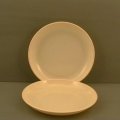
Another great impact was seen in MF moulded domestic table and kitchenware where attractive durable products, e.g. Melaware, enhanced family life.
The many valuable applications of MF derivatives include adhesives, paints, electrical mouldings and glass reinforces substrates. (English melamine text up to here: ©Plastics Historical Society).
Already in world war II the US army had introduced melamine-crockery as a substitute for the traditional china dinner service and even today it enriches the displays of outdoor shops.
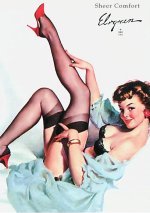
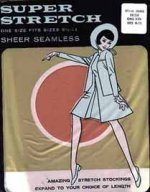
- NYLON (Polyamide) made of hexamethylene diamine and adipine acid. Already in 1931 the Du-Pont chemist Wallace CAROTHERS introduced a polyamide, which he had discovered, to a board of scientists. The material was far from being mature for the market because its molecular weight was not sufficient to draw long stable filaments. For Du Pont was in search of a profitable synthetic substitute for silk. Not before 1936 the optimized material was sold under the names "Exton" and "Fiber 66" by way of trial before the big marketing offensive started in 1938 with the new name "Nylon". In 1940 in the whole US women queued up for nylon-stockings. During the war nylon saved as towrope, parachute and car tire. In 1957 the Swiss Georg MAESTRAL made the first "burr-fastener" (I could´nt find the word in the dictionary, sorry) made of nylon.
- PLASKON (Urea-formaldehyd-polymere) closely related to
Pollopas
( dictionary), presented in 1931 by the Toledo Scale Company. Basicaly white polymere which could be dyed in many colours.
- POLLOPAS (Urea-formaldehyd-polymere) In 1920 first patent for an urea-formaldehyd-polymere by Hans JOHN. 1920-24 further patents followed by F. POLLACK and his collegues in Vienna. The resin required considerably less temperatures and pessures to cure than phenole resins and so permitted the addition of many different dyes. Another advantage which made dying easier was the white basic colour which occureed when saw powder was admixed to the resin.
- POLYETHYLENE made of benzoaldehyde and ethylene. Discovered in 1933 by E.W. FAWCETT and R.O. GIBSON during experiments under high pressure in a kettle called the "the bomb". Because in the third experiment the bomb had exploded causing a snow flurry of plastic flakes, ICI (Imperial Chemical Industries, Great Britain) canceled the financial support until M. PERRIN secretely repeated the tests and patented the new material for ICI in 1936. Because of its outstanding dielectrical properties it was used as a cable insulation (Cautchouk and guttapercha substitute: In 1938 a high frequecy coaxial cable was lain between England and the Isle of Wight) and enabled the engeneers to reduce the size of radar facilities and as a result of this to install them into aeroplanes. So the allies gained a decisive advantage over the Nazis in the air and u-boat combat. After the war polyethylene enriched the households as Tupperware (1945) and the children´s play as Hoolahoop (1957).
- PVC (Polyvinylchloride) Discovered 1926 by Waldo LONSBURY at BF Goodrich when he admixed Tritotyphosphate to the already known and (at Carbide & Carbon Chemical Corp. and I.G. Farben) patented copolymere of vinylchloride and vinylacetate, in order to stabilize the substance for high temperatures. Used since 1929 as rain coat, shower curtain and coloured cable insulation. In 1946 first entrance as record disc (RCA). In the 70ies several deaths were connected with PVC. Chemical workers who for many years had been breathing in the toxic vinyl monomere (VCM), that was emitted during the production process, fell victim to cancer of the liver.
- VISCOSE (Rayon, Reyon) Cellulose regenerate: Cellulose is beeing treated with a lye of NaOH, processed to a viscous mass (viscose) by addition of sulphur carbon and then pressed through nozzles into a bath of natrium sulphate and sulphuric acid were it is beeing precipitated (regenerated) in form of filaments. Patented in 1892 by CROSS & BEVAN to produce artificial silk. The both chemistry consultants investigated the effect of mercerizing process on coton (treatment with NaOH) by order of a textile company. In 1900 the first ready-to-weave thread was produced.
|
|
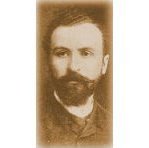 Leo H. Baekeland, inventor of Bakelite, at the age of 23
|
|
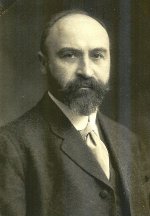 Leo H. Baekeland
|
|
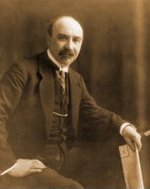 Leo H. Baekeland
|
|
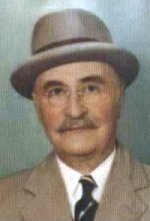 Leo H. Baekeland
|
|
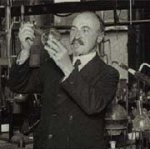
Baekeland in the laboratory
|
|

|
|
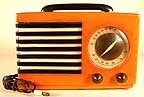 Catalin radio
|
|
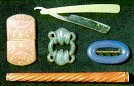 Items made of Parkesine, 1860ies
|
|
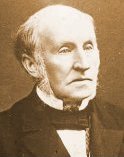 Alexander Parkes, Inventor of Parkesine
|
|
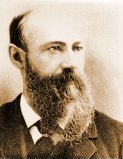 John Wesley HYATT, inventor of Celluloid
|
|
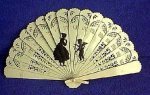 Celluloid fan
|
|
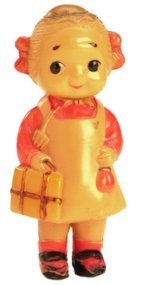 Celluloid doll
|
|
 Celluloid cap
|
|
 Celluloid pens
|
|
 Melamine dishes
|
|
 Nylon pinup
|
|
 Nylon stockings
|
|
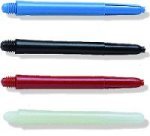 Nylon pens
|
|
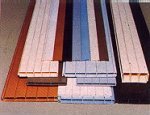 PVC panels
|
|